Posts

Showing posts with the label revolution

Welcome to the new Age of Revolution: No, it isn’t over yet, and we have no idea where it’s going

Andrew O'Hehir Saturday, Apr 29, 2017 03:00 PM CDT Many years ago when I was in college, I played the role of Coulmier in a production of Peter Weiss’ ground-breaking play “Marat/Sade.” It was the apex of my brief acting career, during which I always wanted to play the romantic lead and invariably wound up cast as a pompous authority figure: Egeus, Hermia’s windbag father, in “A Midsummer Night’s Dream”; a high school principal in a 1950s farce called “Our Miss Brooks.” Coulmier is the director of the asylum at Charenton, where the inmates — under the direction of the Marquis de Sade — are performing a play about the French revolutionary leader Jean-Paul Marat, who was murdered in his bath by a woman named Charlotte Corday. (Yes, it’s a play within a play: Avant-garde theater!) One of the play’s conceits is that Coulmier sits in the audience, which supposedly consists of Parisian aristocrats visiting for the day to witness the freak show. Occasionally he interrupts...
Wishing you all a happy and revolutionary Christmas!

Andrew Perriman Tue, 22/12/2015 - 17:57    A ccording to the tradition that has been passed down to us, Christmas is the time of year when we celebrate God coming to earth in lowly human form to save humankind from sin and death. The glory of the deity has been laid aside, the radiant godhead has been veiled in flesh, the creator of all things has been pleased to dwell as man with man for a while, God-with-us, Immanuel, so that there may be peace on earth, so that God and sinners may be reconciled, so that the sons (and daughters) of earth may experience a second birth and die no more, etc.   That coming is dressed in the robes and regalia of Jewish kingship. The incarnate deity is the newborn king, born in Bethlehem of David’s line. But this is little more than circumstantial detail; the essence of the story is theological rather than political, metaphysical rather than historical. Even O Come, O Come, Emmanuel, perhaps the most Jewish of carols, has in v...

Michael Brown's death and the prophetic fire

  In the aftermath of a precious life lsot, a movement emerges BY Cornel West , Peter Goodwin Heltzel NEW YORK DAILY NEWS Wednesday, November 26, 2014, 7:00 PM I am convinced that if we are to get on the right side of the world revolution, we as a nation must undergo a radical revolution of values. We must rapidly begin the shift from a “thing-oriented” society to a “person-oriented” society. — The Rev. Dr. Martin Luther King, Jr. On Monday night at 9 p.m., I (Peter) boarded a JetBlue red-eye in San Diego to fly back to JFK from talking about prophetic witness all weekend at the American Academy of Religion meeting, the annual national gathering of religion educators in North America. Somewhere between consciousness and unconsciousness, I watched Fox News and CNN spread images of flaming buildings and smashed windows all across the nation in light of the grand jury’s decision on the death of Michael Brown in Ferguson, Mo. Yet Fox and CNN missed...

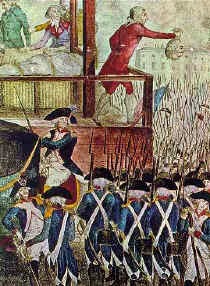
But what about revolution? more notes on Christianity and society

Image
Saturday, 13 September 2014 http://www.faith-theology.com/2014/09/but-what-about-revolution-more-notes-on.html 1. Injustice is bad. Anarchy is worse. 2. Revolution may be divided into two main types. Fast Revolution refers to the overthrow of political authority by a popular movement. Slow Revolution refers to the deep transformation of social institutions from within. The first type of revolution can occur overnight while the second occurs over several generations. 3. It is not advisable for any social theory to stipulate the precise conditions under which Fast Revolution would be justified. When dealing with exceptions to the rule, it is best not to try to regulate them within the bounds of a theory. However, a Christian theory of society ought to have a presumptive preference for Slow Revolution over Fast Revolution, and for stability over disorder, even while allowing that Fast Revolution might be legitimate in certain exceptional circumstances. 4. Fast Revolution may ...