Posts

Showing posts with the label C. S. Lewis

Introduction to a Series on C. S. Lewis' Perelandra

In this series I will offer reflections on each chapter of CSL’s marvelous novel Perelandra , the second story in his science fiction space trilogy. Lewis makes no attempt to hide that this story is his imaginative take on the Adam and Eve story of the Bible. In some ways Perelandra is theological exposition of a Christian version of creation and fall. In other ways, it forms an apologetic for a way of seeing and being in the world largely discounted and dismissed by the modern world Lewis inhabited. In a third way, this story is a profound and searching account of one’s relation to God and Christ (“Maleldil” in the story). Woven together with Lewis’ inimitable skill and immense learning Perelandra is an astonishing achievement. Little wonder it was Lewis’ favorite of all the books he wrote. I will not be referencing all the various literary and mythological allusions in the story. That is not the focus of these posts and beyond my competence at any rate. I intend these as edify...

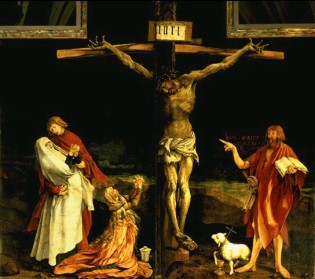
Trinity Sunday: The Christian God (2)

Image
   C. S. Lewis on the Triune God Only Christianity, according to Lewis (in Mere Christianity ), gives us an idea of what something “super-personal” might look like. Eastern religions picture God as finally non-personal, a single reality into which all entities are part of, like water drops in the ocean, and will be absorbed into. Lewis observes, “If that is what happens to us, then being absorbed is the same as ceasing to exist.” Christianity alone has “any idea of how human souls can be taken into the life of God and yet remain themselves—in fact, be very much more themselves than they were before.” Here’s Lewis’ analogy for this: -One-dimensionally, there is a straight line. -Two-dimensionally, there is a square. -Three-dimensionally, squares can be combined to form a cube, something inconceivable in a one-or-two-dimensional world. Similarly, in our world we believe one person is one being. Some marriages, perhaps, give us a hint of “two becoming one.” But still...

God is already working. So what now? Las Vegas gives a clue.

Alan Hirsch May 23, 2017 One of the most basic assumptions of the incarnational missionary is to assume God is already involved in every person’s life and is calling them to himself through his Son. Our mindset should not be the prevalent one of taking God with us wherever we might go. It must be, instead, that we join God in his mission. This means that the missionary God has been active a long time in a person’s life. Our primary job is to try to see where and how God has been working and to partner with him in bringing people to redemption in Jesus. Understand- ing that all humans are made in the image and likeness of God (Gen. 1:27), and in the deepest possible way made for God, we can assume that every human is motivated by spirituality and search for meaning. Even idolatry indicates that people are seeking to worship something beyond themselves. It is deformed spirituality to be sure, but it is spirituality nonetheless—and you can work with that. Recognize that behind...

Insight from The Chronicles of Narnia:  The Story We Live By in The Silver Chair

          We are beginning to learn that we live by what we love rather than by what we can figure out, prove, or reason our way toward. Reason, rather, works to provide grounds for our living by what we love. We were meant to live by and for the love of our Creator. Our reason would have unfolded all knowledge and insight congruent with that love. We call that truth. Unfortunately, humanity rejected the love of God and chose its own love, each to their own. Our reason went to work generating all manner of claims for the truth of our loves. John Calvin describes our minds engaged in this work as a “factory for idols.” Our loves “enchant” us. We are bound by their spell to mobilize all our resources to support and “prove” them true.           In The Silver Chair Eustace Clarence Scrubb and Jill Pole are called into Narnia by Aslan to search out and rescue Prince Rilian, so of King Caspian...

Fourth Sunday of Advent (12.18.16)

Image
Matthew 1:18-25 18  Now the birth of Jesus the Messiah [ a ] took place in this way. When his mother Mary had been engaged to Joseph, but before they lived together, she was found to be with child from the Holy Spirit. 19  Her husband Joseph, being a righteous man and unwilling to expose her to public disgrace, planned to dismiss her quietly. 20  But just when he had resolved to do this, an angel of the Lord appeared to him in a dream and said, “Joseph, son of David, do not be afraid to take Mary as your wife, for the child conceived in her is from the Holy Spirit. 21  She will bear a son, and you are to name him Jesus, for he will save his people from their sins.” 22  All this took place to fulfill what had been spoken by the Lord through the prophet: 23  “Look, the virgin shall conceive and bear a son,     and they shall name him Emmanuel,” which means, “God is with us.” 24  When Joseph awoke from sleep, he did as the...

"If You Think . . . (6)

Our Primary Identity is as a Redeemed Sinner What Bible Do You Read ?           It makes all the difference what Bible you read. And I’m not talking about what translation you use or whether you read it in its original languages. Most of us have been taught to read one version, but I’m going to contend we must learn to read another one. The one we’ve been taught to read runs from Genesis 3-Revelation 20. The other reads Genesis 3-Revelation 20 within the bookends of Genesis 1-2 and Revelation 21-22.           Other than arguing about the “historicity” of the creation stories in Genesis we pretty much ignore the real import of Genesis 1-2 and Revelation 21-22. I suggest they may be the most important chapters in our Bibles.           These four chapters of the Bible, the only four, mind you, that are not touched by the blight of sin, give ...

Donald Trump in The Narnia Chronicles

Image
          Yes, Donald Trump makes an appearance in C. S. Lewis beloved Narnia. There he has the name Uncle Andrew and he’s in The Magician’s Nephew . Uncle Andrew is a magician with delusions of grandeur. He fancies himself the greatest of magicians and there is no end to the things he dreams that he, and he alone, can achieve. Imperious, manipulative, greedy, willing to hurt others for his own ends, short-tempered he cuts a rather foolish caricature of himself throughout the story. Lewis’ description of his appearance reinforces his cartoonish character.           Uncle Andrew unexpectedly find himself present at the creation of Narnia as the great Lion Aslan sings this new land in being. Uncle Andrew, of course, can only see commercial possibilities in the fecund abundance of this young creation. He cannot understand Aslan, however, hearing only terrifying roars when the lion speaks. Tr...

Does Anybody Really Kknow What Time It Is?

          I’m dating myself, I know, by using an old song from the rock group Chicago as a title. But it still works, I think. Knowing what time it is, knowing, that is, who we are, where we are, and how we’re supposed to live in that time is crucial to living with coherence and integrity. And I contend that by and large the North American church has not and does not now what time it is for us.           This is not primarily a sociological or historical question (though both are involved in various ways). No, it is a theological question. In fact, it is an apocalyptic question. C. S. Lewis sets the context (or time) in which the church lives. “ Enemy-occupied territory—that is what this world is. Christianity is the story of how the rightful king has landed, you might say landed in disguise, and is calling us all to take part in a great campaign of sabotage” [ C. S. Lewis, Mere Christ...

7 fallacies about hell

Mon, 11/05/2015 - 15:45 Hell Like a lot of people who promote the doctrine of hell as a place of eternal suffering, J.D. Greear insists, in a recent post on the Gospel Coalition site , that he would happily erase the belief from Christian teaching if he could, but he can’t because it’s in the Bible, so we have to live with it. Moreover, in his view, we can’t fully understand God and his world unless we come to terms with the doctrine. To that end he sets out “seven truths” that he thinks should frame our discussion of the topic. The problem is that the fact of hell is merely taken for granted—we are asked to take C.S. Lewis’ word for it. You would have thought that a set of seven framing truths would have a demonstrable biblical or theological relationship to the doctrine that supposedly sits in the middle of them. But they don’t. They are arbitrary and incoherent; they don’t appear to frame anything in particular; and where scripture does come into the picture, it is spe...

The Christian Cosmology of C.S. Lewis

Image
Stratford Caldecott     Ecologists tell us that the interdependence of all living things makes the world more than a mechanism, more than the sum of its parts, perhaps even in some sense organically alive in its own right. But this is little more than a rediscovery in scientific terms of what had already been understood “poetically” in all previous civilizations. They may not have had (or needed) the term “ecology,” but the ancient writers were deeply aware of the inter-relatedness of the natural world, and of man as the focus or nexus of that world, which they expressed in the doctrine of correspondences. It was, of course, not scientific in its formulation, but it expressed a profound insight that remains valid, and the present ecological crisis could only have developed in a world that has forgotten it, or forgotten to live by it. In  A Secular Age  (p. 60), the Canadian philosopher, Charles Taylor, contrasts the ancient notion of  cosmos ...

C.S. Lewis on True Friendship

Image
by Maria Popova “Friendship … has no survival value; rather it is one of those things which gave value to survival.” “What is so delicious as a just and firm encounter of two, in a thought, in a feeling?” Emerson marveled in his exquisite meditation on friendship . But what, exactly, is at the heart of this “just and firm encounter”? In his insightful 1960 book The Four Loves ( public library ), C.S. Lewis picks up where Aristotle left off and examines the differences between the four main categories of intimate human bonds — affection, the most basic and expressive; Eros, the passionate and sometimes destructive desire of lovers; charity, the highest and most unselfish spiritual connection; and friendship, the rarest, least jealous, and most profound relation. In one of the most beautiful passages, he considers how friendship differs from the other three types of love by focusing on its central question: “Do you see the same truth.” Lewis writes: Lovers seek for privacy....

Dwarfing the Church!

In The Last Battle C. S. Lewis portrays a group of dwarves in Aslan’s country (heaven).   Now these dwarves don’t love Aslan or support Narnia.   They’re only for themselves and committed solely to preventing themselves from being taken in by and manipulated by any other party, be it Aslan (the Christ figure) or Tash (the pagan deity of the Calormenes, Narnia’s arch-enemy).   Surprisingly, it is just these dwarves who find themselves in Aslan’s country. Well, almost.   They are in Aslan’s country surrounded by glorious beauty and splendor, extravagant provision, people who care for and about them, and, of course, Aslan himself. Yet, focused and turned in on themselves, the dwarves only see themselves scrunched into the corner of a smelly, nasty stable.   Closed to the beauty and glory around them, they sit dirty and blinded in the dark, experiencing Aslan’s feast as dirty stable grub, able only to hear Aslan’s call to them as a frightening roar, and t...

Christian Art, Music, etc. or Art, Music etc., done Christianly?

I believe that any Christian who is qualified to write a good popular book on any science may do much more by that than by any direct apologetic work…. We can make people often attend to the Christian point of view for half an hour or so; but the moment they have gone away from our lecture or laid down our article, they are plunged back into a world where the opposite position is taken for granted….What we want is not more little books about Christianity, but more little books by Christians on other subjects—with their Christianity latent. You can see this most easily if you look at it the other way around. Our faith is not very likely to be shaken by any book on Hinduism. But if whenever we read an elementary book on Geology, Botany, Politics, or Astronomy, we found that its implications were Hindu, that would shake us. It is not the books written in direct defense of Materialism that make the modern man a materialist; it is the materialistic assumptions in all the othe...

Christian Theology in a Thumbnail: Jesus (4)

           In the last post I talked about Jesus in the language given us by the Bible and theological tradition.   In this post I want to offer further reflection on Christ using different language and images that bring home certain key but often forgotten aspects of his identity and work.   The first is that I believe we can’t grasp Jesus properly until we consider him as a “problem child.”   Yes, a problem child.   And the other image I want to pursue is Jesus as God’s “subversive counter-revolutionary.”           First, Jesus is a problem child.   I mean this quite literally.   Anyone and everyone he encounters will have their minds and hearts teased, stretched, and or broken by his reality.   No one can control him, he forces them respond to his reality.   Just think about it:   Mary and Joseph, the magi, Herod and all of Jerusalem, John...